

Coupures
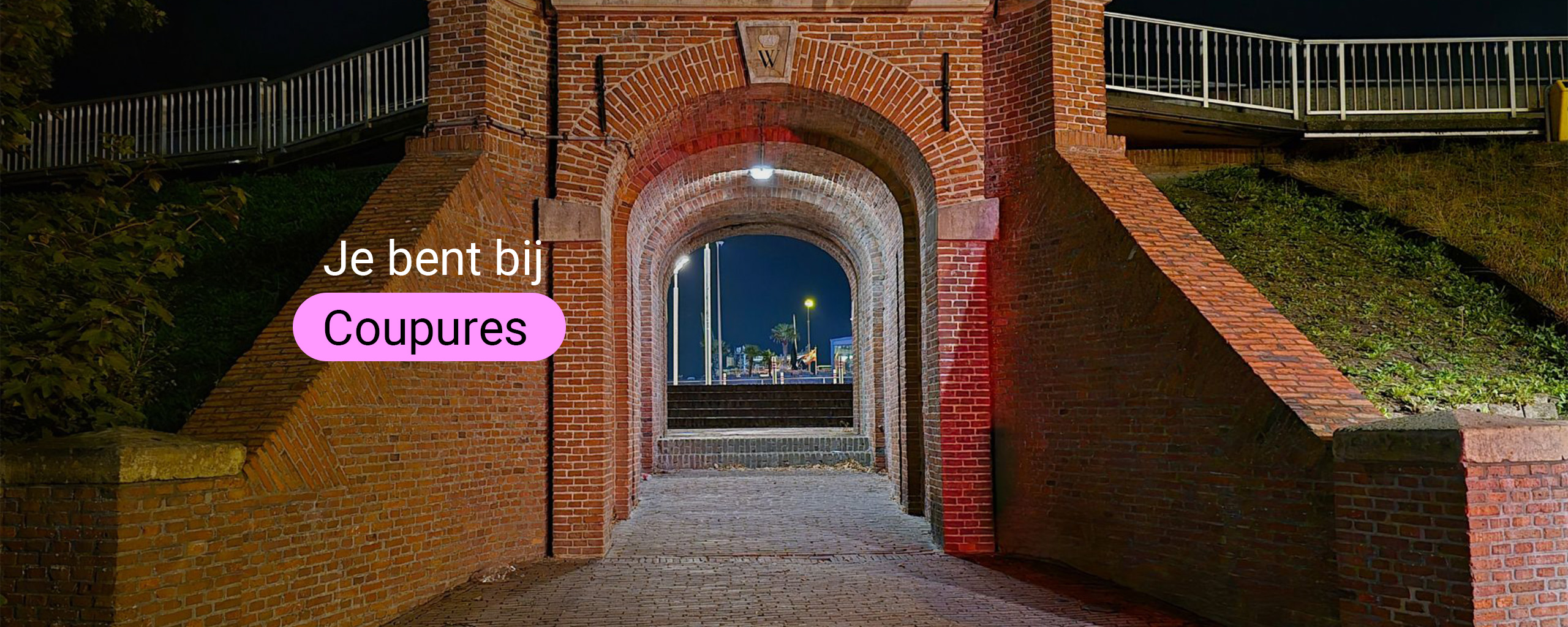
You are at coupures
A coupure is a gap in a flood defence, such as a dyke, that serves as an important passage between the city and the port. There are four passages: two electric roll-up doors, a swing door, and a sliding door. In an emergency, we can close these doors. This always happens in cooperation with the Hunze en Aa's water authority.
Our coupures are extremely important to protecting the land from outside water. Between October and April, there is often a risk of storms and high water. When the water level rises to more than +3 metres above sea level, the coupures close. The highest water level we have ever recorded is 4.83 metres above sea level. At that point, we close the gates to prevent water from entering. The higher the water, the better the gates seal due to water pressure. If water does leak in, it is collected in the sewage system. This also allows us to keep an eye on our 750-metre-long dyke.
Video of coupure closure exercise
We close the dyke passages in Delfzijl during high water, when water levels are expected to reach 3 metres above sea level. This happens most often during the storm season, from October to April.
Safety vests, flashing lights, and road closures are the first signs that it’s about the happen. During preparations, diversion signs are put up and traffic lights are adjusted to redirect traffic. You can see how the closure of the coupures proceeds in the video…
Location
Coupures Delfzijl
De Vennen
9934 CK Delfzijl
Measures in case of high water
When the coupures are closed, we take a number of important measures:
- We clear car parks and buildings outside the dykes.
- We shut down sewage pumps outside the dykes.
- We set up toad diversions and clean up the area after a period of high water.
History
To protect Delfzijl from the Spanish army, construction of a small fortification around Delfzijl began in 1569. Nevertheless, Delfzijl was ultimately captured by the Spanish in 1580. In 1591, Prince Maurice recaptured the city, expanded the fortifications, and built a wide wall on the sea side, incorporating the Grote Waterpoort (Great Water Gate). Later, during the Siege of Delfzijl (1813-1814), the English entered the city through this gate when they recaptured it from the French.
The coupures are key passages in the flood defence between the city and the port. With four passages, they protect us from outside water. When the water level rises to more than 3 metres above sea level, we close the gates and spring into action. The Grote Waterpoort is an historic symbol of our water management.
The Grote Waterpoort
The Grote Waterpoort, as it stands today, was built in 1833. In the 1970s, this dyke passage was restored and is still in use today as a coupure. The gate can be closed with a metal door in the event of rising water.
The Kleine Waterpoort
The Kleine Waterpoort, also known as the Ruyterpoort, is another coupure in the dyke at Delfzijl. Its gates can be closed with a manually operated swing gate. The gate is named after Michiel de Ruyter, who brought the West India fleet ashore at Delfzijl in 1665. The gate features several paintings commemorating this event.
Farmsumer gate
One of the other gates in Delfzijl was the Farmsumer gate, which closed off Delfzijl from the access road from Farmsum. This gate no longer exists. During the relief of Delfzijl, the French left the city through this gate.
Landpoort
The Landpoort was also a former gate in Delfzijl.