
Home
Your Waterscape!
The Netherlands and water. They are inextricably linked. Ever since the Middle Ages, we have been engaged in a battle against rising waters. We kept the water at bay with dykes and dyke passages, also known as “coupures”, and excess water was drained away through waterways and with windmills. Today, pumping stations have taken over the role of the windmills almost everywhere, but more is needed to keep our feet dry. Climate change is presenting us with additional challenges, such as periods of heavy rain or actually too little rain, resulting in flooding or drought. In addition, we also want to keep our water clean for the sake of our own health.
Locks, weirs, and pumping stations
To ensure an adequate supply of clean water in every season, Noorderzijlvest Water Authority has installed many locks, weirs, pumping stations, coupures, and treatment plants in our region. Each one serves a specific purpose and is a familiar feature of the landscape for many residents. But what do they actually do?
Locations
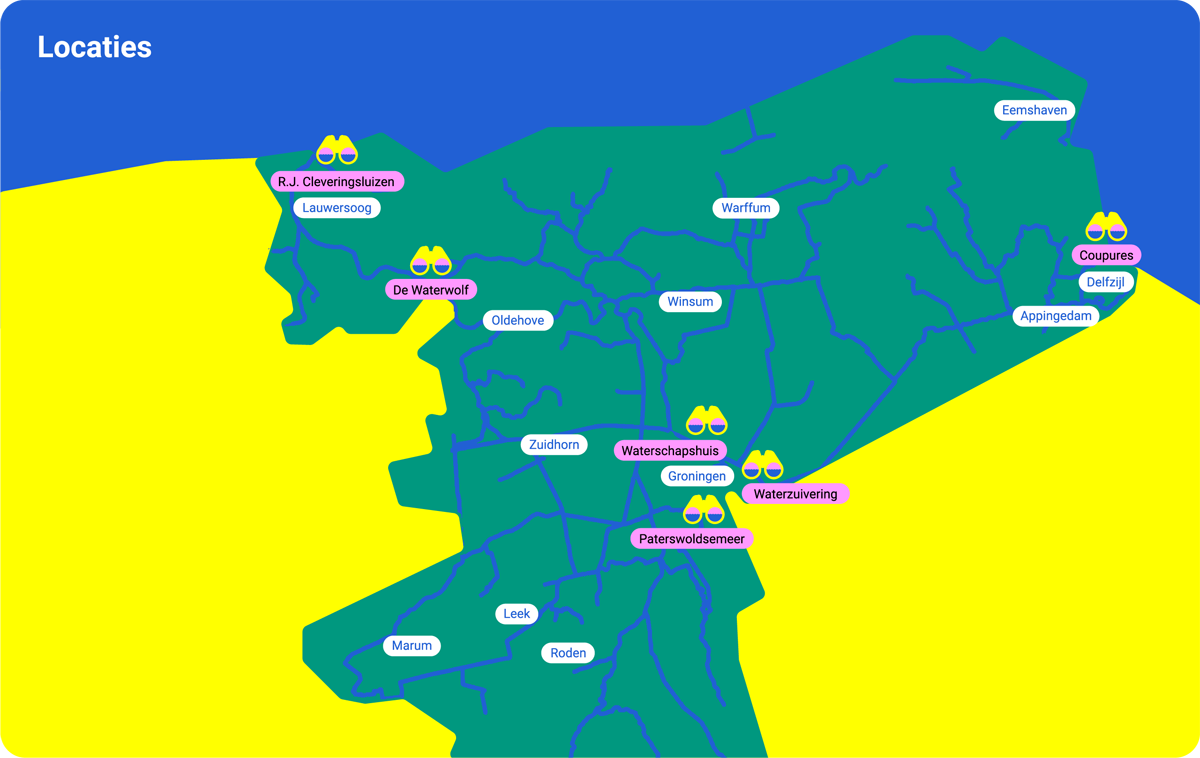
On the map below, you’ll see various locations marked with binoculars. From these places in our region, we’ll take you on a journey into the world of water over the coming weeks. You’ll recognise these locations by the specially designed benches shaped like diving boards. Over time, these will be placed at various pumping stations, locks, wastewater treatment plants, and dykes. Each bench also features the recognisable binoculars. They symbolise focus, visibility, and experiencing the outside world.
The first location with a bench is the Water-authority office on Stedumermaar. This is the starting point for several beautiful and informative cycling and walking routes. Would you like to learn more about the location or just get out and enjoy the outdoors? Visit the Water-authority office and download the various routes as PDF files.
The next two locations where benches will be installed and routes marked out are De Waterwolf pumping station (Electra) and the coupures (dyke passages) near Delfzijl. These will follow later this year, but you can already read up about them! The remaining locations marked on the map with binoculars will follow in 2026.
Answers to the questions:
- Is it okay to water your garden every day in this summer heat?
- Why do I often see fish coming to the surface in summer?
- Why is the water level in the ditches high in summer?
- What is a pumping station?
- What can I do if my garden stays wet when it rains a lot?
- Does water from ditches always flow directly to the sea?
- What does it mean if my house is below N.A.P. (Amsterdam Ordnance Datum)?